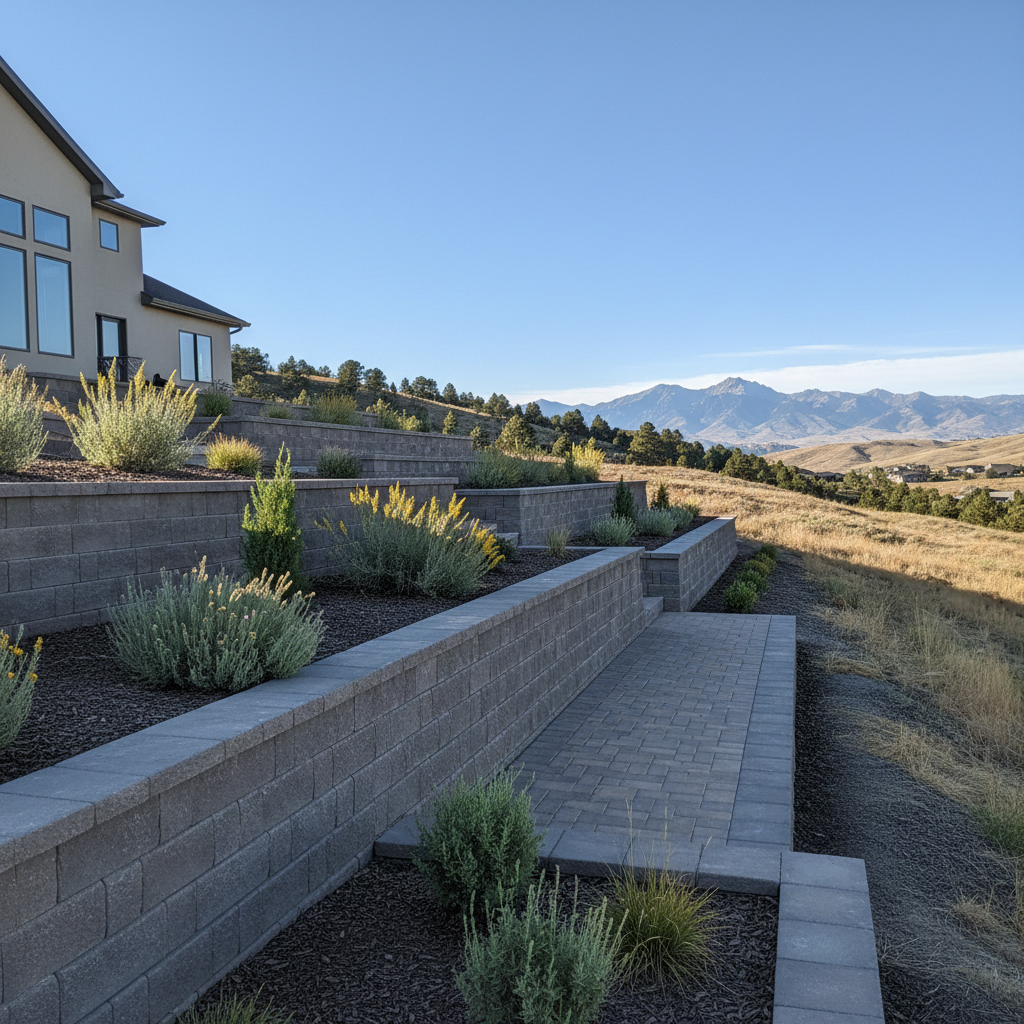
Alright Lehi homeowners, let us talk about concrete retaining walls. If you have a sloped yard, especially up on the benches overlooking Utah Lake or in some of those newer developments like Traverse Mountain, you know how important these walls can be. These concrete retaining walls are not just for looks. They stabilize your soil as well as prevent erosion. These concrete retaining walls can also turn unusable sloped areas into functional, beautiful spaces for patios or gardens in Lehi.
Building a concrete retaining wall in our area is not like building one in, say, Arizona. Our climate here in Lehi has hot summers as well as freezing winters. We also have those well-known freeze-thaw cycles. This means you have to be smart about when you build your concrete retaining wall. You also need to know how to protect your investment here in Lehi, Utah.
When Should You Schedule Your Concrete Retaining Wall Project?
Timing is everything when it comes to concrete work. Concrete retaining walls are no exception to this rule. You want to hit that sweet spot where the weather is cooperating. The soil should be stable. The concrete also needs to cure properly for your concrete retaining wall project.
-
Spring (Late April/May): This is often a good time for a concrete retaining wall project. The ground is thawed out. Temperatures are moderate. We usually have not hit the peak summer heat yet. The soil is workable. This makes excavation and placement smoother for your concrete retaining wall. It is also a great time if you want to get your landscaping in after the wall is done. This gives everything a full growing season.
-
Early Summer (June): This is still a good option, especially if spring was wet. You will get warm, dry weather. This weather is ideal for concrete curing. Just keep an eye on those really hot days. Extreme heat can affect curing times if it is not managed properly for your concrete retaining wall.
-
Fall (September/October): This is another excellent period for a concrete retaining wall project. The temperatures start to cool down. The ground is not frozen. There is often less rain than in spring. This allows for solid construction before winter sets in. It also gives the earth time to settle before the major temperature shifts in Lehi.
What about winter for your concrete retaining wall? Freezing temperatures and snow make it pretty unsuitable for actual construction. Excavation becomes difficult. Concrete will not cure right. However, winter is a fantastic time for planning your concrete retaining wall project. Getting your design, permits, and contractor lined up in the colder months means you can jump right into construction as soon as spring hits. This also helps you beat the rush for concrete retaining wall projects.
Weather Conditions That Affect Concrete Retaining Wall Work
Our Lehi climate throws a few challenges at concrete. We have to account for these challenges when building a concrete retaining wall.
-
Temperature: Concrete needs specific temperatures to cure correctly. If it is too cold, it will not gain strength. If it is too hot, it can dry out too fast. This can lead to cracking in your concrete retaining wall. We are looking for moderate temperatures. Ideally, this is between 50-80°F for optimal strength and longevity. Lehi sees average highs from 22°F in January to 93°F in July. Picking the right month is key for your concrete retaining wall project.
-
Moisture: Rain during installation or early curing can wash out the mix. It can also weaken the concrete. We avoid pouring during heavy rain. On the other hand, concrete needs moisture to cure properly. So, in our dry summer months, we will take steps to keep it hydrated. This includes using curing compounds or covers for your concrete retaining wall.
-
Soil Stability: This is very important for a concrete retaining wall. If the soil is too wet or frozen, it is unstable. This makes proper compaction and foundation work difficult. This is why dry, workable soil is so important for a strong base for your concrete retaining wall.
Protecting Your Concrete Retaining Wall Investment Year-Round
Once your concrete retaining wall is built, you want it to last. Here is how to protect it, especially with our local weather patterns in Lehi.
-
Drainage, Drainage, Drainage: We cannot stress this enough for your concrete retaining wall. Most concrete retaining wall failures happen because of water buildup behind them. Water expands by about 9% when it freezes. That pressure can push against your concrete retaining wall. This causes cracks and movement. We always incorporate complete drainage solutions. This includes gravel backfill as well as weep holes as well as French drains. These direct water away from your concrete retaining wall. Make sure these systems stay clear of debris year-round.
-
Beware the Freeze-Thaw Cycle: Lehi experiences significant freeze-thaw cycles. This happens especially in late fall as well as winter as well as early spring. This is when temperatures go above and below freezing. This causes any water in or behind your concrete retaining wall to freeze as well as expand as well as then thaw. This constant movement stresses the concrete. This leads to cracks as well as spalling (flaking) as well as long-term deterioration. Majestic Concrete Solutions uses concrete mixes specifically made for durability in our regional climate. These mixes are designed to resist these cycles for your concrete retaining wall.
-
Seal It Up: Applying a high-quality concrete sealer is a great way to protect your concrete retaining wall. It creates a barrier that prevents water from getting into the concrete's pores. This is your first line of defense against freeze-thaw damage. It also protects against chemical exposure. This includes de-icing salts if the concrete retaining wall is near a driveway. Make sure to apply it after the concrete is fully cured. Do this during dry, warmer conditions. This is usually in the fall before the cold really sets in for your concrete retaining wall.
-
Regular Inspections: Your concrete retaining wall is like anything else on your property. Give it a look over a couple of times a year. Look for any new cracks. Look for signs of shifting. Check for drainage issues. Catching small problems early can save you a lot of trouble and money later on for your concrete retaining wall.
A well-built and well-maintained concrete retaining wall is a fantastic asset to your Lehi home. It protects your property. It adds usable space. It also boosts curb appeal. By understanding our local climate and taking these steps, you will make sure your concrete retaining wall stands strong for many years in Lehi, Utah.