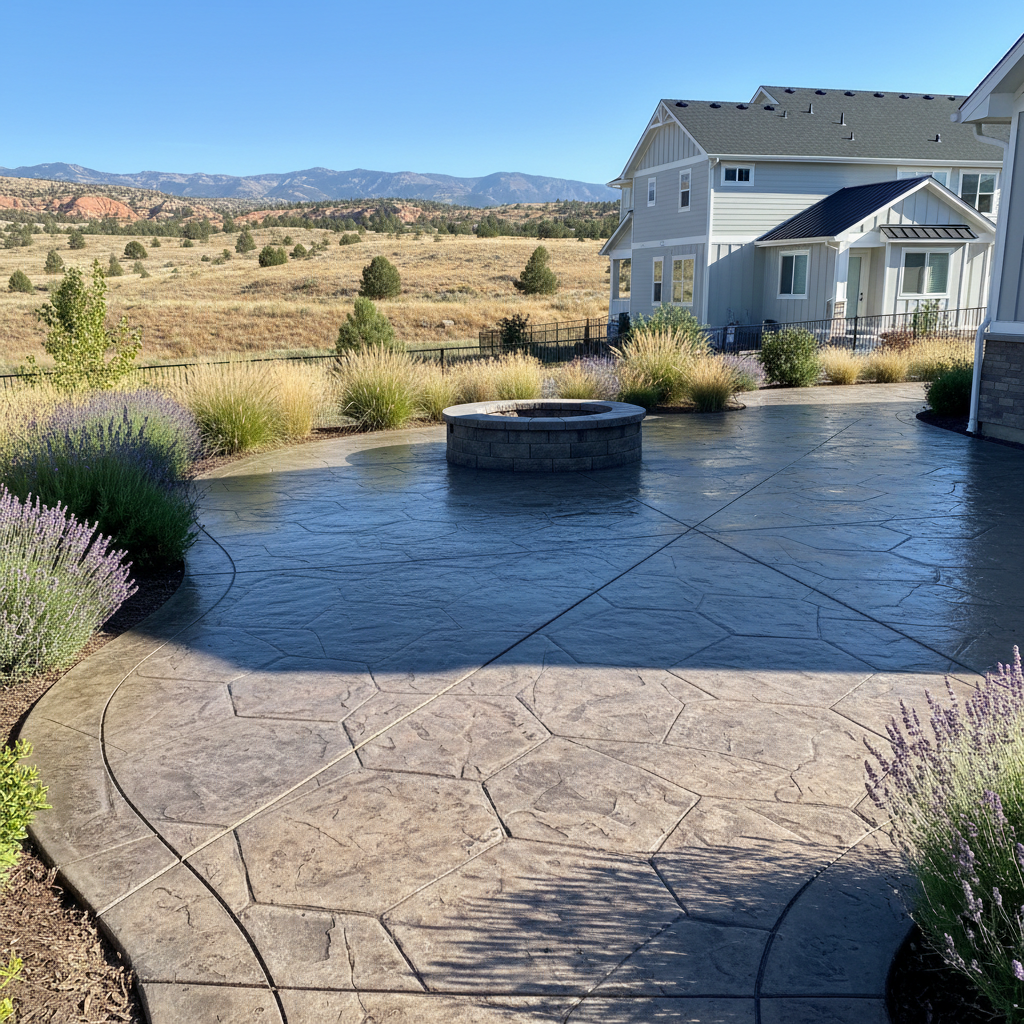
The weather changes very fast along the Wasatch Front. One day you are enjoying a warm afternoon on your stamped patio in Traverse Mountain, and the next day you are shoveling heavy slush or dealing with sudden spring downpours. That constant shift takes a real toll on outdoor surfaces. If you have invested in decorative concrete around your home, taking care of it is not just about keeping up appearances. It is about protecting that investment from our brutal freeze-thaw cycles.
Why Regular Maintenance Matters Here
Decorative concrete adds character to a property. Whether you went with a classic slate-textured patio or an acid-stained walkway, keeping it clean is your first line of defense. Dirt, leaves, and lawn clippings love to trap moisture against the surface. When temperatures drop below freezing, that trapped moisture expands and starts breaking down the sealer and the paste layer of the concrete. Majestic Concrete Solutions always tells homeowners that a simple routine goes a long way. Sweeping regularly and giving the surface a gentle wash every few weeks stops grime from settling into the texture and color joints.
Sealing is very important. You cannot skip it around here. Majestic Concrete Solutions recommends reapplying a quality breathable sealer every two to three years depending on how much direct sunlight and foot traffic your installation gets. The intense summer sun beats down hard on south-facing yards in Lehi, fading colors if the protective coat wears thin. A fresh coat of sealer locks out moisture, blocks UV rays, and keeps those rich earth tones looking sharp.
Warning Signs to Watch For
Catching small problems early saves you from bigger issues later on. Keep your eyes open for these common red flags:
- Flaking or peeling areas on the surface, which usually means the old sealer is failing and letting moisture underneath.
- Hairline cracks starting to spider-web across stamped patterns, especially near joints or corners.
- Faded or chalky patches where the color looks washed out from UV exposure or hard water accumulation.
- White, powdery deposits known as efflorescence pushing up through the pores.
If you see water soaking into the concrete instead of beading up on top, your protective barrier is gone. It is time for a reseal before winter sets in.
When to Call a Professional
Some upkeep is easy to handle on a Saturday morning, but certain issues require an experienced crew. If you are noticing wide cracks, sinking slabs due to shifting Utah clay soil, or severe spalling where the top layer of concrete is popping off, do-it-yourself fixes do not cut it. Trying to patch colored or stamped concrete yourself usually leaves an obvious, mismatched scar that ruins the whole look. When structural shifting or deep surface damage happens, give Majestic Concrete Solutions a call to assess whether grinding, resurfacing, or targeted injection is needed to restore your hardscape safely.